Made by cutting
Dimension Stone From the Far End of the State
A stone that arrives finished. Somebody else quarried it, somebody else squared it, and what a local builder bought was a numbered piece that fitted a drawing already made. Almost none of what it cost was the stone.
- Which bed or works
- The Lake Superior brownstone beds at the northern edge of the state, worked hard in the eighteen eighties and nineties.
- How it was dressed
- Cut, squared and dressed at the quarry against a numbered order, then crated or blocked for loading.
- How it got here
- By rail, and the carriage is most of the price. A piece that arrives broken is a piece paid for twice.
What the stone is
A sandstone again, but a different animal: darker, tighter, evenly bedded and strong enough to be cut into pieces that carry load across a span rather than merely sitting in a wall. The color runs from a dull red to a deep brown, and it holds a crisp arris, which is the sharp edge where two dressed faces meet.
Crisp edges are the reason it was bought. A stone that holds an arris can be cut to a profile, and a profile is how a building says something without saying anything: a molded sill, a stepped course over a window head, a doorway with a return.
Why it came from so far away
Because the local bed could not do it, and everybody involved knew that. A soft, loosely cemented sandstone will not hold a fine edge, will not span, and will not stand upright in a wet position. So the pattern is consistent: the cheap stone stays in the lowest courses, and the dear stone appears exactly where a piece must be strong and shapely at the same time.
There is nothing sentimental in it. A builder was not buying the north of the state. He was buying an arris.
Ordered, not chosen
This is the part that separates cut stone from every other material in this catalogue. A brick is a unit: a thousand of them are interchangeable and the wall decides what happens. A piece of dimension stone is not. It is ordered by number against a schedule, cut to that number at the quarry, and shipped to a particular hole in a particular wall.
Which means:
- The drawing exists before the stone does
- A mistake in the drawing is a stone paid for and useless
- A piece broken in transit stops the work, because no substitute is on hand
- The delivery has to be scheduled against the masonry, not stockpiled
None of that is true of the brick two entries along, and the difference shows up in what kinds of buildings carry dressed stone. It is the material of work with a paid designer somewhere behind it.
What the freight did to the price
The quarry price of building stone in this period is not the number that matters. Stone is heavy, and heavy things are priced by what it costs to move them. A cut piece can double in cost between the quarry face and the wall, and on a long haul the freight is the larger half.
That single fact explains most of the material geography of this city better than taste does, and it has its own page: the freight that set the price.
Where it shows
In parts, not in walls. Openings, thresholds, a course over a shopfront, occasionally a whole ground story on a building where somebody spent money on purpose. Above that, brick. Almost always brick.
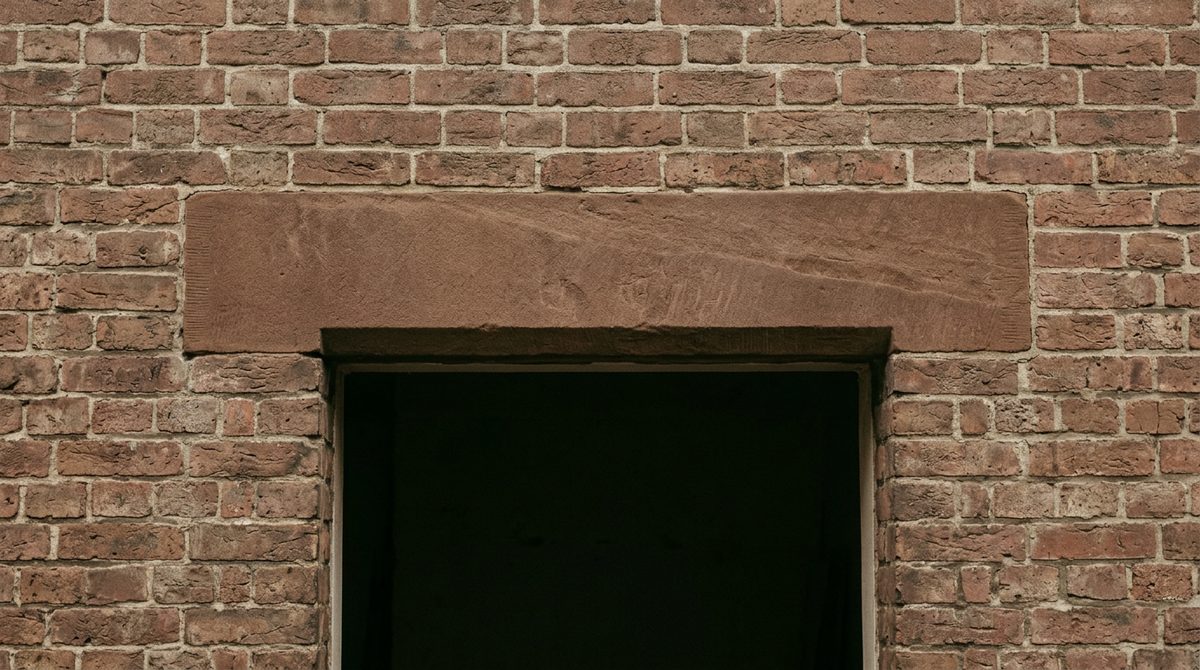
Made by cutting, one of five ways in the catalogue